How to Write a Light Novel: Complete Guide for Beginners
Master the unique rhythm of Japanese light novels—dialogue-heavy scenes, high-concept hooks, tight volume arcs, and worldbuilding that never bogs down the story.
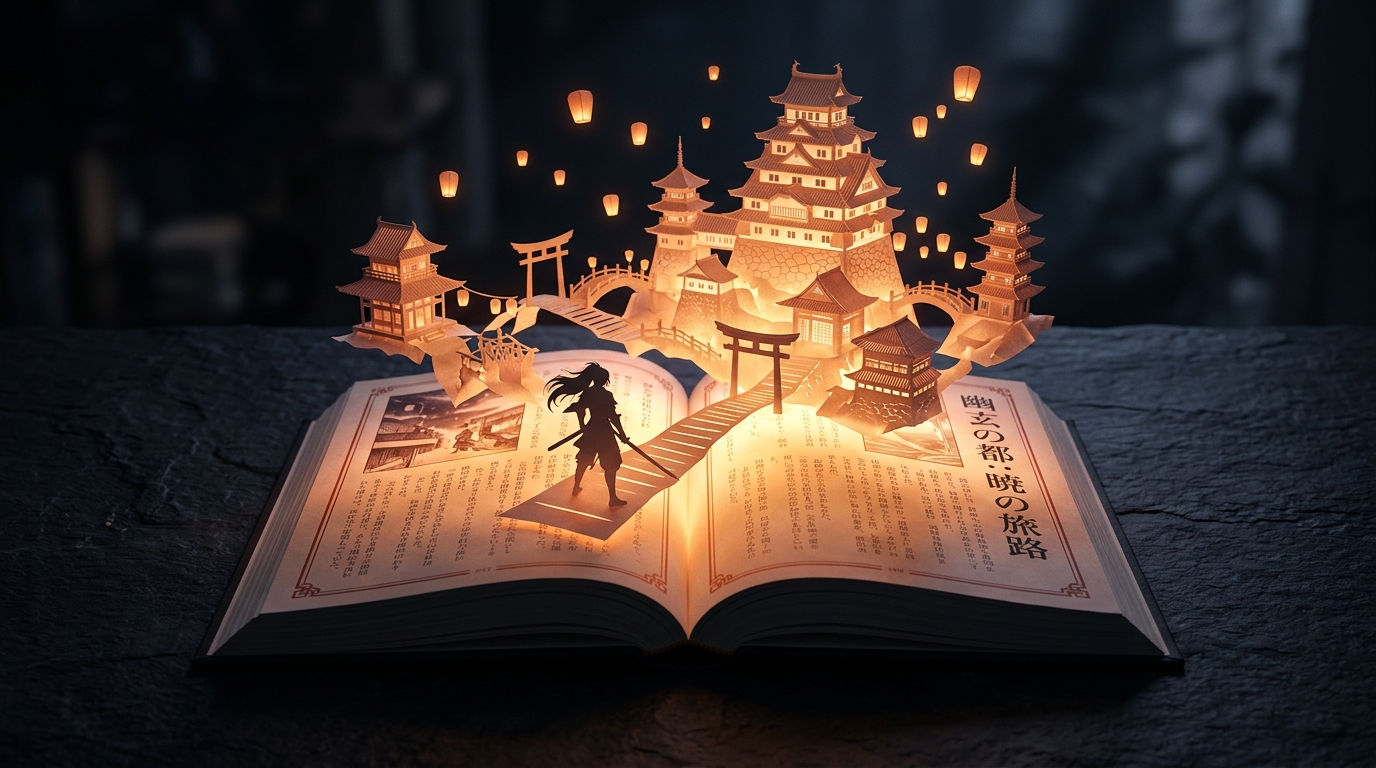
1. What Makes a Light Novel Different from Standard Fiction?
In Western publishing, novels often linger on dense atmospheric prose and intricate sensory descriptions. In contrast, Japanese Light Novels (ranobe / ライトノベル) are built on snappy readability, vibrant voice, and immediate immersion.
Typically printed in Japanese bunkobon (pocket-sized A6) format or serialized on digital platforms like Kakuyomu and Shousetsuka ni Narou, light novels target readers on commutes, between classes, or reading on smartphones. The golden rule is speed of comprehension without sacrificing emotional weight.
2. The Three Core Pillars of Light Novel Writing
Every successful light novel relies on three key narrative engines:
- 1. The High-Concept Hook: Your premise must be instantly pitchable. Whether it is an isekai reincarnation, a supernatural high school battle club, or a cosy dungeon bakery, readers should grasp the unique friction within two sentences.
- 2. High Dialogue-to-Narration Ratio: Light novels are heavily conversational. Dialogue carries exposition, interpersonal conflict, and emotional stakes. If two pages pass without spoken lines, the pacing is likely dragging.
- 3. Character-Centric Momentum: Readers fall in love with character quirks, distinct catchphrases, and clear motivations before they care about geopolitical world lore.
3. Structuring a Light Novel Volume (Word Count & Pacing)
A standard light novel volume runs between 40,000 and 55,000 words (roughly 250 to 320 manuscript pages). Because light novels are published serially or in volume installments, each book must function as both a standalone satisfying story and a chapter in a grander saga.
A proven 5-act volume pacing framework:
- The Inciting Status Quo Break (Chapters 1–2): Introduce the protagonists in their baseline environment, then drop the disruptive catalyst that forces action.
- Escalating Friction & Team Assembly (Chapters 3–5): The cast attempts their first counter-measure, revealing personal flaws or clashing ideologies.
- Midpoint Reversal (Chapter 6): A false victory or revelation that redefines the stakes.
- The Climax & Emotional Showdown (Chapters 7–9): A high-octane confrontation where personal growth overcomes the antagonist.
- Aftermath & Next Volume Tease (Epilogue): Celebration, quiet character reflection, and a tantalizing breadcrumb for the next volume.
4. Crafting Distinct Character Voices
Because light novels minimize attribution tags like "he said solemnly" in favor of clean quotes, each character’s cadence must be unmistakable:
- Vocabulary choices: A noble scholar uses measured, precise language; a delinquent uses clipped slang, contractions, and rhetorical interruptions.
- Sentence lengths: Impulsive characters speak in short bursts; calculating tacticians speak in multi-clause observations.
- Internal Monologue: Light novel protagonists frequently have active, self-aware internal voices (often acting as the comedic or grounded straight-man to their bizarre world).
Keep your light novel cast & arcs organised.
Inkspine lets you group scenes into volumes, maintain character bibles, and write distraction-free on your Android phone, tablet, or web browser.
5. The Web Novel to Book Pipeline
Today, nearly 70% of anime-adapted light novels (including Slime Tensei, Mushoku Tensei, and Overlord) originated as amateur web novels published chapter-by-chapter online.
When serializing your story:
- Aim for chapters of 1,500 to 2,500 words.
- End every single chapter with a micro-hook or unanswered question.
- Maintain a consistent publishing cadence (e.g. every Tuesday and Friday) to train your readership.
- Back up your project frequently so you retain full ownership of your drafts.
6. Recommended Writing Software for Light Novels
Writing episodic light novel series requires tools that can manage multi-book arcs, cast rosters, and seamless mobile-to-desktop drafting.
Inkspine is built specifically for serial and novel writers:
- Volume & Arc Organization: Organize your series into volumes, acts, and chapters without creating dozens of scattered text files.
- Cast & Lore Bible: Track magic skills, power levels, relationship graphs, and hometowns right next to your active chapter editor.
- Dark & Warm Paper Modes: Protect your eyes during late-night writing sprints with hand-tuned typography and distraction-free layouts.
- Full Offline Support: Write on the train or in airplane mode without worrying about losing connection or cloud dropouts.